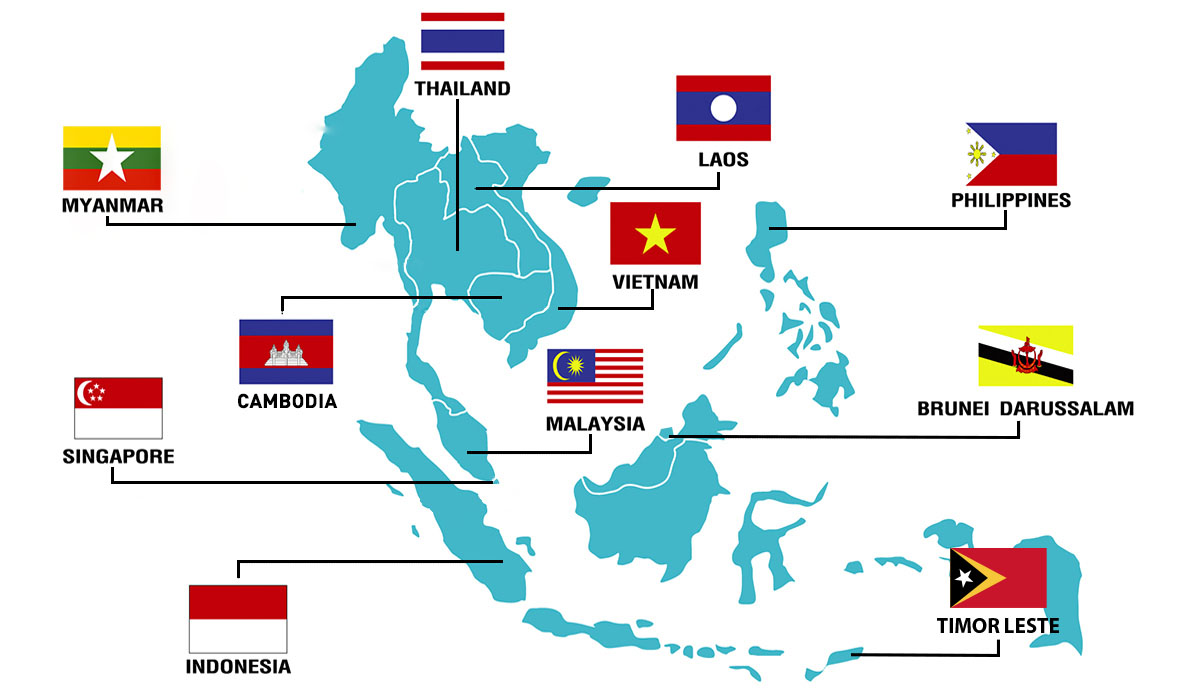
In The Region
 Brunei
Korean Fried Chicken Chain Taps Halal Market in Brunei
Korean fried chicken franchise, Genesis BBQ Group (BBQ), has signed a master franchise agreement with Brunei-based KB Company SDN BHD to expand its presence in the Southeast Asian halal market.
Stores will offer signature menu items, including its signature Golden Olive Chicken and seasoned chicken, along with other K-food items. The company also plans to offer localized menu items in the future.
“Following Malaysia, this agreement will further expand our brand presence in the Southeast Asian Muslim consumer market,” a BBQ official said. “We will work with our local partner to successfully establish ourselves in the Brunei market and broaden our foundation for tapping into Southeast Asia’s high-income halal market.”
BBQ has become a key player in the global halal market, thanks to its standardized operations and cooking systems based on the requirements for halal certification from the Department of Islamic Development Malaysia (JAKIM).
 Cambodia
Sixth Confirmed Case of H5N1 Avian Influenza
The latest case of H5N1 avian influenza has been reported in Oddar Meanchey Province as of September 27. The 49-year old man from Tuol Kruos Village, O’Svay Commune, Trapeang Prasat District, is currently in isolation at a hospital, receiving care. Investigations revealed that the man had been raising chickens on a farm, and made direct contact with dead and sick poultry. It was confirmed on September 23 that the farm’s poultry had the H5N1 virus.
The antiviral medication Tamiflu has been distributed to those who were in direct contact with the patient. H5N1 avian influenza primarily transmits amongst birds, but can cross over to humans. Symptoms for humans range from a mild fever and cough to severe, deadly respiratory illness.
The Ministry of health recommends the public avoid handling or eating sick or dead poultry, and to ensure all poultry products are cooked thoroughly.
Cambodian Broiler Farmers Cut Production as Prices Fall Below Cost
Broiler farmers in Cambodia have reduced production as the price of chickens fail to match the costs of raising them. Sarath, 47, has raised broilers for 15 years, and has had to cut his operation by half. He reports, “The cost of producing one kilogram of chicken is nearly (US)$2 due to rising chick and feed prices.” In contrast, as of Augusts’ prices, farmers may receive only slightly more than 5,000 riels (US$1.23) per kilogram.
Rising feed, electricity and veterinary costs, together with competition from larger companies that import chicks, produce their own feed and contract farmers to raise birds, have added to the squeeze. Such companies, who can obtain chicks, veterinary services and feed at lower, bulk costs, can produce chickens at a lower, more competitive price – prices that smaller farmers find difficult to match.
Srun Pov, president of the Cambodia Livestock Raisers Association (CLRA), blames the unrestricted import of chicks to produce more than the domestic market can absorb, and called for restrictions on imports to protect local farmers.
 Indonesia
Unhealthy Food Regulations to be Implemented
The Indonesian government, in partnership with the World Health Organization (WHO), will be implementing measures meant to boost transparency and discourage the consumption of unhealthy processed foods. Dietary factors have become the third-largest contributor to death and disability in Indonesia, largely due to the prevalence of cheap and convenient processed foods in the market, such as sugary drinks and instant noodles.
Adult obesity rates have soared, one in five teenagers are overweight, and nearly over the age of three drinks more than one sugar-sweetened beverage daily, while on 3.3% eat the minimum recommended portions of fruit and vegetables.
In response, the WHO provided the Indonesian government with a set of recommendations in 2024. The government enacted new regulations based on the WHO’s guidelines on July 26, 2024, with a two-year schedule to implement them.
Among the regulations are laws that mandate nutritional labeling on the front of food packages, menu labeling for ready-to-serve foods, and the reformulation of products to reduce sugar, salt and fat contents. Additional measures have been introduced to regulate how unhealthy foods can be advertised, and parliamentary discussions are underway on whether to introduce a new tax for processed foods.
Indonesia’s Food and Drug Authority (BPOM) is confident that such laws will shape what Indonesians eat, resulting in a healthier society. BPOM will continue working with the WHO to monitor the impact of these regulations and develop new measures as necessary.
 Malaysia
El Niño Conditions May Affect Poultry Production
Malaysia’s Meteorological Department (MetMalaysia) expects strong El Niño conditions to develop in late 2026, bringing extreme heat and dry weather from January to May 2027, with temperatures possibly reaching 40°C.
Heat stress becomes a significant risk above 32–35°C, particularly in high humidity. Poultry birds eat less, grow more slowly and convert feed into body weight less effectively. Severe, prolonged spells of heat can be fatal.
Modern broiler chickens are particularly vulnerable. Their rapid growth rate generates considerable body heat, and will consume less feed during hot weather as additional digestion and metabolism will generate additional body heat. Laying hens eat less, resulting in fewer and smaller eggs. Severe heat events can cause deaths in heavier birds within hours, who have greater difficulty shedding excess heat.
Experts stress that this does not mean an automatic shortage. According to Professor Datuk Zulkifli Idrus of the Academy of Sciences Malaysia, farms with better environmental controls may be better prepared to withstand prolonged periods of heat.
Mohd Muzamri Shoib, a broiler farmer and chairman of the Selangor Poultry Farmers Association, advises, “Farmers need to make preparations early rather than waiting until the chickens begin showing signs of heat stress.”
 Myanmar
–
 Philippines
Philippine Chicken Meat Imports Forecast to Rise 14.7% in 2027
Demand for chicken in the Philippines is set to keep growing. In its Poultry and Products Annual released on September 17, the USDA Foreign Agricultural Service (FAS) in Manila forecasts 2027 chicken meat consumption at 2,704 thousand metric tons (TMT), up 8.6% from 2026, driven by population growth and chicken’s affordability. From January to August 2026, chicken was about 35–40% cheaper than pork, as the local hog sector has yet to fully recover from African swine fever.
Local production is forecast to rise 5.8% to 1,920 TMT in 2027. Imports are expected to grow faster, up 14.7% to 780 TMT, as demand from food manufacturers and food service operators rises.
The United States remains the Philippines’ second-largest chicken meat supplier, with chicken leg quarters making up nearly 70% of U.S. volumes. However, imports from the U.S. fell 16% in the first half of 2026, partly due to temporary bans on poultry from states with avian influenza outbreaks. Imports from Brazil, the largest supplier, rose 16% over the same period on the strength of its price competitiveness.
 Singapore
U.S. eggs return to Singapore after 20 years
U.S. eggs are back on Singapore shelves for the first time in about two decades, after U.S. officials and the Singapore Food Agency agreed on export certification and disease-tracing standards. First shipments arrived in July 2026, and the eggs are now sold at more than 50 FairPrice outlets. A second importer is in talks to supply FairPrice and Sheng Siong. Singapore imports more than 65% of its eggs.
Singapore’s Fourth Egg Farm to Break Ground
Ellipsiz Ltd’s subsidiary ISE Foods Holdings will break ground on Singapore’s fourth egg farm on September 29. The project, which received approval from the Singapore Food Agency (SFA) in 2022 and is backed by ISE Inc., one of Japan’s largest egg producers, was announced with a planned capacity of 360 million eggs a year, enough to raise local production from about 30% to 50% of Singapore’s egg demand.
Financing is now in place. In March, Maybank extended a term loan of up to S$65 million (US$50.34 million) to partially fund the farm, which forms part of Singapore’s push to produce more of its food locally and reduce its reliance on imports. The farm was originally slated to begin operations in 2024, and its construction has faced cost and biosecurity challenges
 Thailand
Betagro’s S-Pure Brand First Company to Earn Newly Launched ‘Thai Golden Eggs’ Certification Mark
As of September 2026, Thailand’s Department of Livestock Development (DLD) has launched the Suphannahon – or, Thai Golden Eggs – certification as a marker of high safety standards for Thai chicken eggs. S-Pure, a premium food brand under the Betagro Public Company Limited (BTG) umbrella, is the first and only brand to be approved for this certification.
The certification marks eggs as fresh, clean and safe for raw consumption. It enforces strict controls to eliminate major pathogens from early production, and has markers that let consumers trace every egg back to its origin. This enables stringent quality checks through the entire supply chain, through breeder farms, hatcheries, certified layer farms and egg collection and grading centers.
Thailand’s Minor Food Takes Ownership of Bonchon Outside the Americas
Bangkok-based Minor Food and Serruya Private Equity have acquired Korean fried chicken chain Bonchon. The deal, which closed in early September, gives Minor Food ownership of Bonchon globally outside the Americas, while Serruya takes ownership across the Americas. Minor Food, previously Bonchon’s master franchisee in Thailand, invested US$50 million in the deal.
Bonchon has about 500 restaurants worldwide across nine markets: the U.S., Thailand, the Philippines, Vietnam, Myanmar, Taiwan, Laos, Cambodia and Malaysia. Minor Food, which runs 2,843 outlets in 24 countries under brands including The Pizza Company, Burger King and Dairy Queen, plans to grow Bonchon in existing and new markets, putting one of the region’s biggest fried chicken franchises under Thai ownership.
 Vietnam
Vietnam Sets Sights on Global Livestock Competitiveness
Vietnam holds a strong position in regional and global livestock markets, ranking ninth in the world for poultry population and second for ducks, and has long had strong domestic supply capacity. Local production meets 81.8% of its poultry demand, and egg production exceeds consumption.
However, at the 2026 Tay Ninh Import-Export Supply Chain Connectivity Conference, Dr. Pham Kim Dang, Deputy Director General of the Department of Livestock Production and Veterinary Medicine, emphasized that deeper access to international markets requires meeting international standards, not just large-scale production.
Joining demanding global value chains will require standardized processes at every stage of production, and traceability is essential to meeting international standards. Vu Manh Hung, Chairman of Hung Nhon Group, said that companies do not have to do everything themselves, but each link in the chain must be strong and connected through a common standard. Hung Nhon, which operates large-scale, high-tech farms, works with international partners from the Netherlands, Belgium, France and Germany on feed, breeding stock, housing equipment and animal health to build an integrated production model.
Moving the sector into more standardized frameworks will improve the industry’s competitiveness and open access to export markets.